Robotic-arm assisted knee replacement
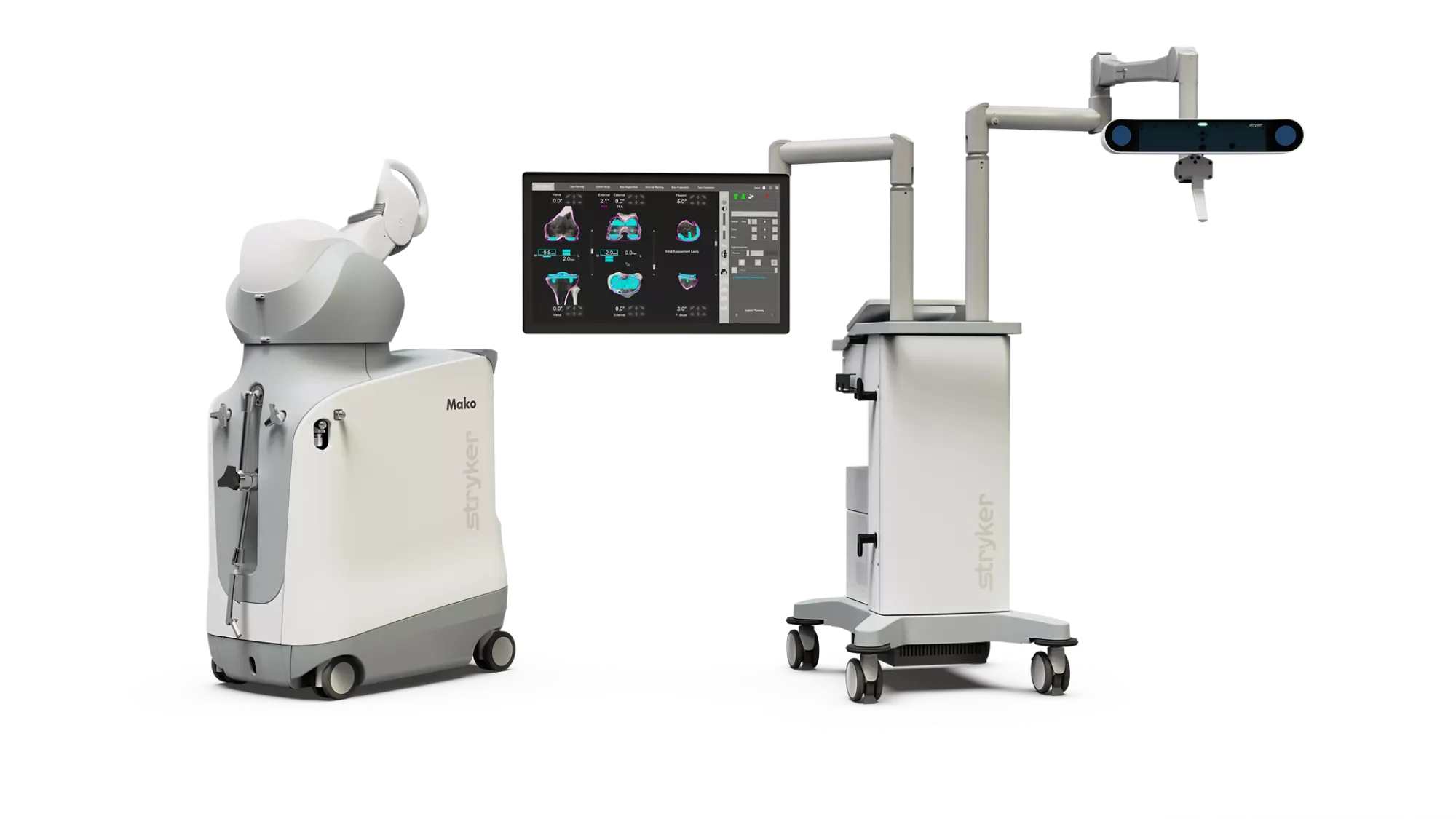
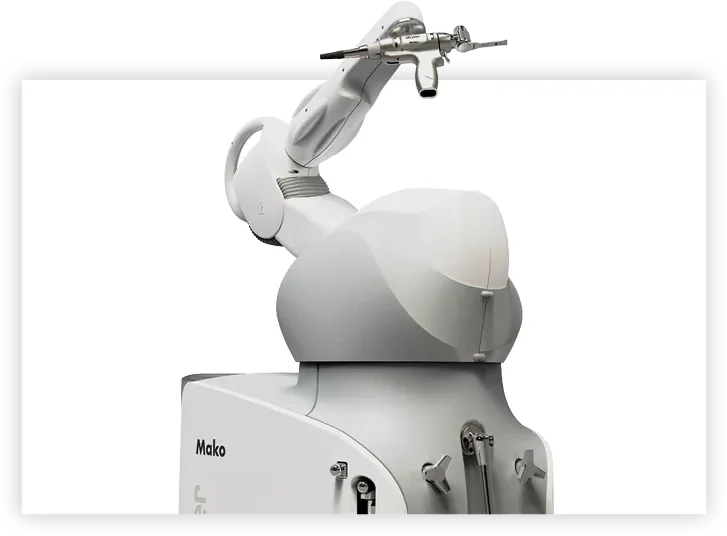
Dr. Akhtar has used Mako robotic-arm assistance for more than a decade, for both partial and total knee replacement.
Technology × joint care
For more than a decade, Dr. Nauman Akhtar has explored how robotics, navigation and 3D planning can make hip, knee and shoulder care more precise and more personal. Orthobotics is his guide to that work: how the technology works, what the research shows, and what it means for your recovery.

Not ready for surgery?
“Our first approach is always to do the more conservative thing,” says Dr. Akhtar. Many patients find relief without surgery, and these treatments can help you stay active longer.
Is it time?
“I tell patients to think about what their arthritis pain is doing to their life on a daily basis,” says Dr. Akhtar. Tap each statement that's true for you.
Knee
When conservative care is no longer enough, the goal is the least surgery that gives you back full function. For knees, that starts with a robotic plan built from your own anatomy.

Dr. Akhtar has used Mako robotic-arm assistance for more than a decade, for both partial and total knee replacement.
The method
With Mako, Dr. Akhtar plans your surgery on a 3D model of your own joint. In the operating room he guides the robotic arm, which helps him carry out that plan.
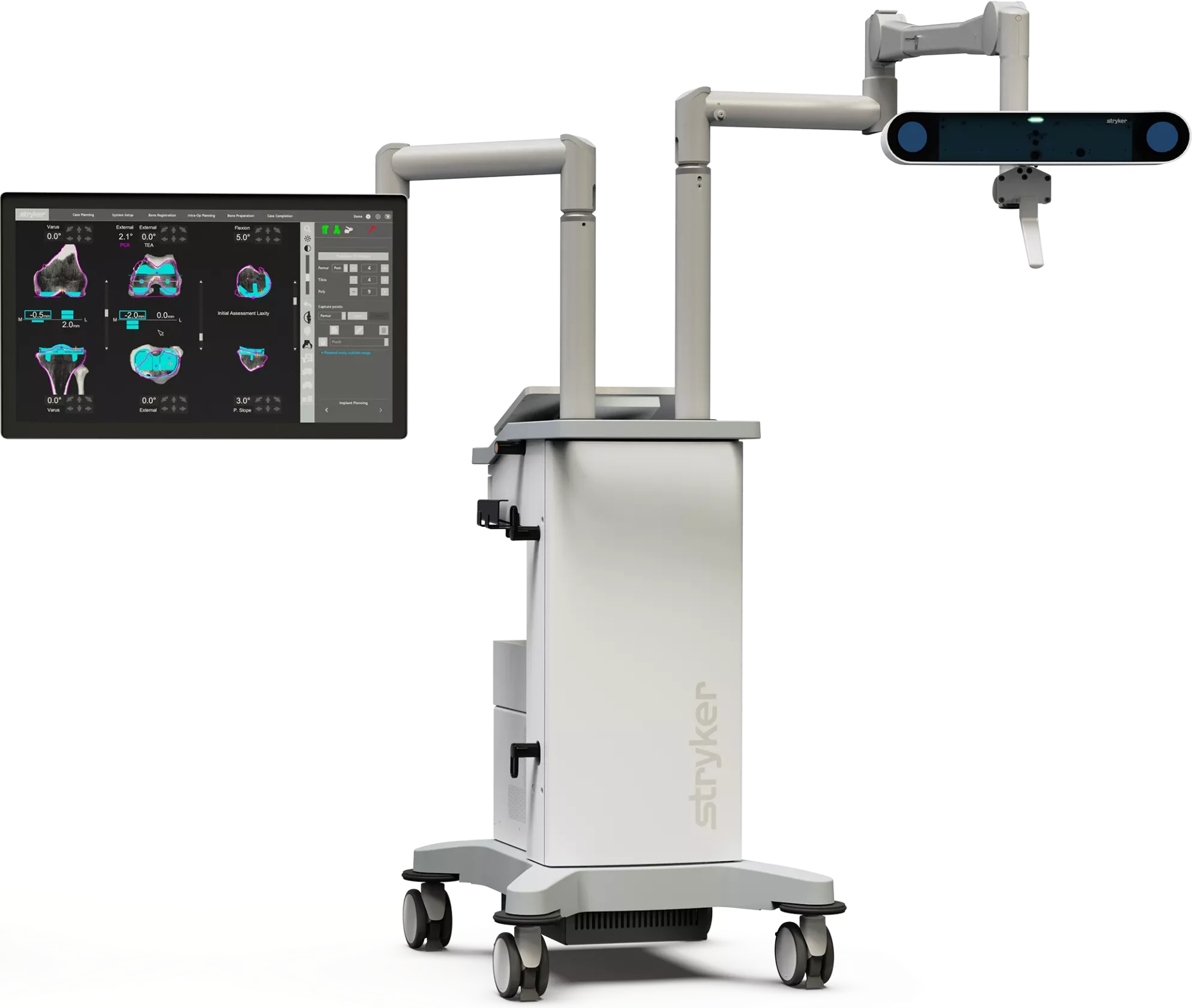
A CT scan of your joint becomes a three-dimensional model of your bones. The plan starts from your anatomy, not an average.
Dr. Akhtar uses the model to choose implant size, position and alignment, and to balance the joint around how you move.
He guides the arm through surgery. Its tactile boundaries help keep the work inside the area he planned, which is designed to protect surrounding bone and soft tissue.
What the research shows
Robotic and navigated surgery are among the most studied technologies in joint replacement. Here is what four well-known studies found.
Robotic total knee
In 80 consecutive patients, robotic-arm assisted total knee replacement was associated with less pain after surgery, less need for pain medication and a faster return of knee function than conventional surgery.
Kayani B, et al. Bone Joint J. 2018;100-B(7):930–937. Prospective cohort study.Robotic partial knee
In a randomized trial of 139 patients, robotic partial knee replacement placed implants more accurately in every measured direction. The figures shown are for the tibial component's sagittal angle.
Bell SW, et al. J Bone Joint Surg Am. 2016;98(8):627–635. Randomized controlled trial.Navigated hip
Pooling five trials with 400 patients, computer navigation reduced variability in hip socket position and the risk of placing it outside the recognized safe zone (relative risk 0.21).
Beckmann J, et al. Acta Orthop. 2009;80(5):538–544. Systematic review and meta-analysis.Partial vs total knee
In 528 patients with arthritis on the inner side of the knee, partial replacement was as good as total replacement at five years and more cost-effective. More partial knee patients said they would have the operation again.
TOPKAT trial, The Lancet 2019. Randomized trial.Studies describe groups of patients treated by specific surgeons. Your own result depends on your condition, health and recovery, and Dr. Akhtar will talk through what to expect in your case.
Partial or total?
“Some people may have just one or two compartments affected by arthritis, but the rest of their knee is healthy,” says Dr. Akhtar. Where your arthritis is decides which operation fits.
Recovery
Typical milestones after knee replacement, as described by the American Academy of Orthopaedic Surgeons. Your own plan may move faster or slower.
Most patients begin exercising the knee within hours and walk with a walker, crutches or cane soon after.
Some patients go home the same day. Others stay overnight in the hospital.
Plan for help with cooking, shopping, bathing and laundry for several weeks.
Most normal daily activities return. After total knee replacement, most people drive again at about 4 to 6 weeks.
Walking, swimming, golf, biking, light hiking and dancing. Dr. Akhtar also suggests the elliptical, and limiting running and jumping.
Partial knee: patients usually spend little or no time in the hospital and resume regular daily activities by about 6 weeks.
Source: AAOS OrthoInfo, Total Knee Replacement and Unicompartmental Knee Replacement.
Hip & shoulder
Computer navigation for hips and 3D planning for shoulders bring the same plan-first approach to every joint Dr. Akhtar replaces.

For hips, Dr. Akhtar uses computer navigation. A camera tracks instruments in real time and gives him live measurements during surgery, through a minimally invasive approach.
Every shoulder replacement Dr. Akhtar performs is planned in 3D from a CT scan of your own shoulder, so implant size and position are set before the first incision.
Your surgeon
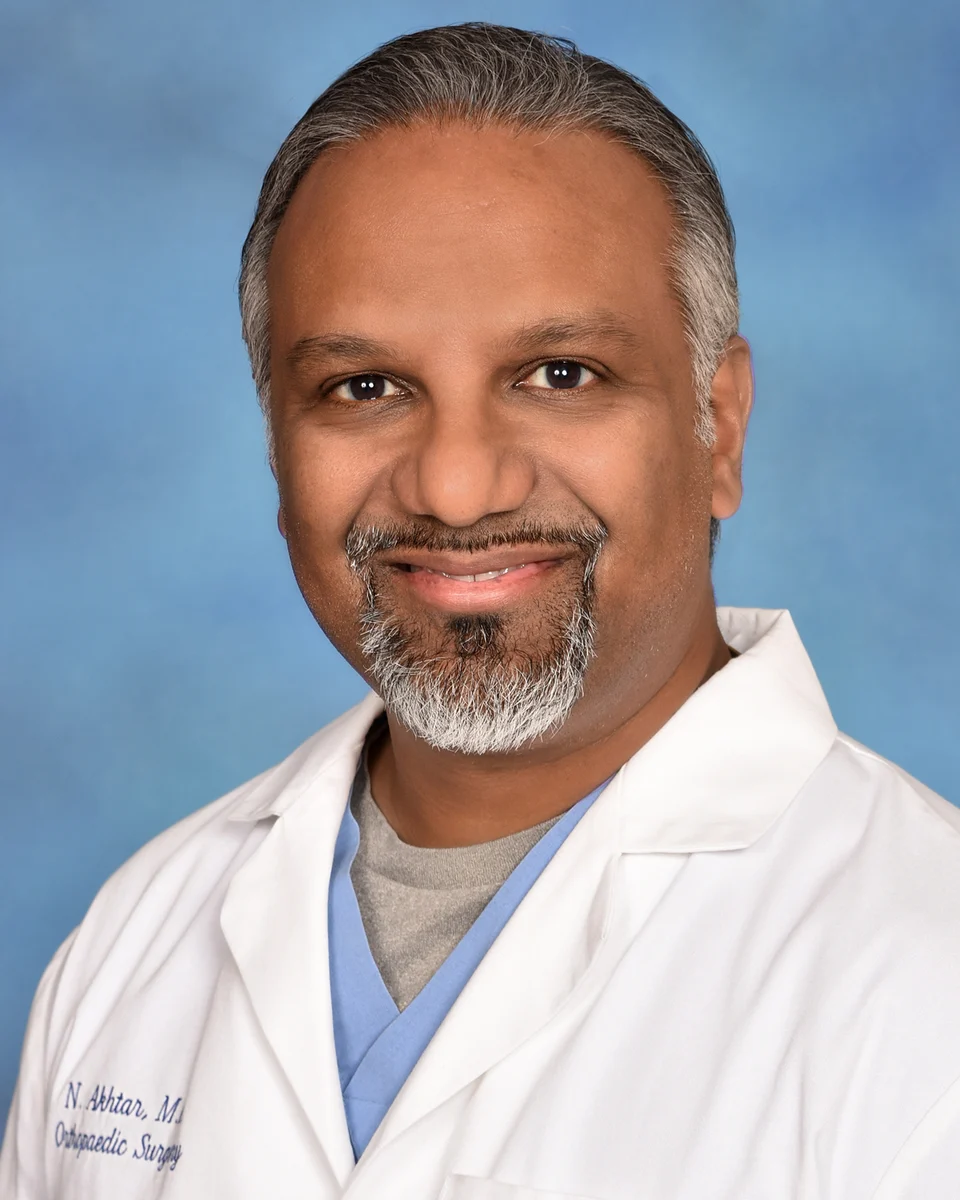
Dr. Akhtar is a board-certified, fellowship-trained joint replacement surgeon at The Orthopedic Group in Leesburg. He has served as Medical Director of the Total Joint Program at Inova Loudoun Hospital since 2010, building the program that earned Center of Excellence accreditation, and chaired the hospital's Department of Orthopaedic Surgery from 2019 to 2023.
He trained as the Aufranc Joint Reconstruction Fellow at New England Baptist Hospital, a Harvard affiliate, and was performing robotic knee surgery in Loudoun County by 2014, when he discussed it on WUSA 9. Washingtonian has named him a Top Doctor every year since 2018 and to its Top Doctors Hall of Fame, and Northern Virginia Magazine named him a Top Doctor in 2025 and 2026.
It's extremely important to get back to the things you love doing.
Dr. Nauman Akhtar
In patients' words
Excerpts from five-star patient reviews of Dr. Akhtar, as posted on Google, Healthgrades and Vitals.
Dr Akhtar replaced both my knees… After the surgeries I am able to walk long distances without pain. I feel 30 years younger.
What an incredible blessing to walk again without pain.
I had both hips done by Dr. Akhtar, and both were basically free of pain and minimal swelling after the operations.
Dr. Akhtar has replaced both of my knees in the last 14 months… My recovery was much quicker than I expected.
Over the course of 2 1/2 years I had both hips replaced by Dr Akhtar… Zero complaints.
He takes his time explaining the procedure and shows compassion for what you're going to go through.
I had both Knees done by Dr. Akhtar. He is the best of the best. I now have my life back.
He used state of the art techniques to perform a partial knee replacement.
He has a wonderful bedside manner and truly cares about his patients. I couldn't be happier with my results!
Pain, pain went away… oh my goodness, how my life has changed since having surgery.
Dr Akhtar is an amazing surgeon. Throughout the process he guided me through options…
What I found different about him is that he was transparent about the procedure and the expectations.
Skilled Surgeon & wonderful bedside manner. DO NOT HESITATE to book your appointment as you are in great hands.
As a surgeon, I know talent… Refer my patients to him including my daughter.
Questions
No. Dr. Akhtar performs the surgery. The robotic arm is a tool he guides, and it helps keep the work within the plan he made from your CT scan.
Research consistently shows robotic-arm assistance places implants more accurately and with fewer alignment outliers, and several studies report less early pain and shorter hospital stays. Whether that adds up to better long-term function and implant survival is still being studied. Dr. Akhtar uses the technology because it helps him carry out a precise, personal plan, and he will tell you plainly what it can and can't do for your joint.
The scan is used to build a 3D model of your joint. Dr. Akhtar plans implant size and position on that model before surgery, and the arm uses it to guide the work.
Partial knee replacement can be an option when arthritis is limited to one part of the knee and the ligaments are healthy. It is usually not suitable with inflammatory arthritis or significant stiffness. X-rays and an exam at your consultation will show whether it fits.
In Dr. Akhtar's words, the decision “has more to do with your symptoms, and less to do with your age.” If pain is limiting your life and other treatments have stopped working, it is worth a conversation.
“Modern hip and knee replacements usually last 15 to 20 years, depending on how you use them,” says Dr. Akhtar.
Some patients can have knee replacement as an outpatient. Whether that is right for you depends on your health and support at home, and you will decide it together with Dr. Akhtar.
Coverage depends on your plan. The office can help you check before surgery.
Press & perspective
From Dr. Akhtar
Straight answers to the questions patients ask most, written and reviewed by Dr. Akhtar.
Arthritis rarely announces the right moment. These are the signs I talk through with patients when they ask whether it's time.
Robotics & researchPatients often ask me whether robotic surgery is “better.” Here is an honest summary of what the evidence shows, and where it is still catching up.
KneeMany people assume a bad knee means a total knee replacement. For the right patient, a partial replacement can be the better operation.
Request a consultation
Bring any recent X-rays or MRI reports. You will leave with a clear answer on your options, including treatments that don't involve surgery.